



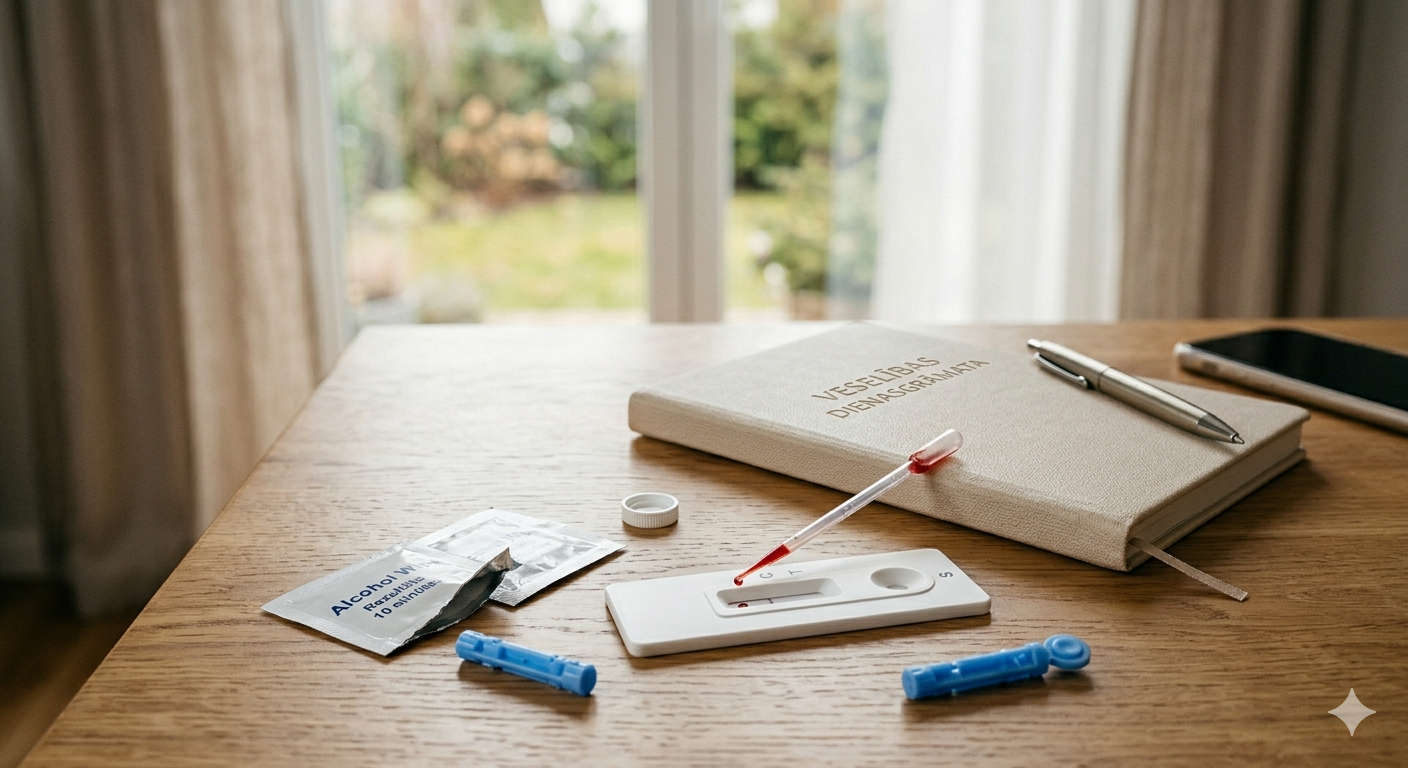
TSH test at home.
A TSH test at home is becoming an increasingly popular way to detect thyroid disorders in time. Given that thyroid diseases often develop unnoticed, regular monitoring is essential for anyone who cares about their health.
We have compiled data so that each of us can better understand what TSH is, why it is important to check it, and how a quick thyroid self-test can help you monitor your health at home.
What is TSH and how does it affect the thyroid gland?
TSH (thyroid-stimulating hormone) regulates the function of the thyroid gland and affects the level of hormones in the body. It determines how actively the thyroid gland produces hormones that are responsible for metabolism, energy levels, body temperature, and heart function.
Thyroid disorders are more common than many people think. The most current statistics show that up to 1 in 8 people will experience thyroid problems during their lifetime, and women are 5-8 times more likely to experience thyroid problems than men. Hypothyroidism affects approximately 3-5% of the population in Europe, which is a high enough indicator to start paying increased attention and concern. Many people live with unknown hormonal disorders.
Thyroid disorders often manifest themselves with non-specific symptoms, such as:
1. Hypothyroidism (fatigue, weight gain, feeling cold, difficulty concentrating)
2. Hyperthyroidism (palpitations, weight loss, anxiety, increased sweating)
TSH self-test is a practical solution for daily health monitoring, it allows you to quickly check your TSH level at home, notice abnormalities in time, monitor your health without visiting a doctor, and decide on additional tests.
It is recommended to regularly check the TSH level for women (especially after the age of 40), people with chronic fatigue, if there are weight fluctuations, if there is a family history of thyroid disease and people with increased stress.
The TSH test is one of the most important indicators for assessing thyroid function. Given the high number of undiagnosed cases, regular monitoring is essential.